

Full-stack bioinformatics platform with AI assistance for biomedical research. Features real-time chat with LLM integration, RAG system with PubMed database, user authentication, and WebSocket connections for live query processing. Designed for researchers to analyze and connect their data to biomedical literature with AI support.
Stack











The Problem
Modern scientific research faces an exponential growth of publications and structured data, making literature review and knowledge extraction a slow and error-prone task. Researchers lose valuable hours navigating through thousands of PDF articles and scattered databases to find specific answers, significantly delaying progress in biotechnological and medical projects.
The Solution
Curie is an intelligent analysis platform that uses RAG (Retrieval-Augmented Generation) architectures to transform how scientists interact with information. By allowing the upload of local documents (PDF, DOCX), Curie relates data with scientific literature and integrates databases like arXiv and PubMed, acting as a domain expert that can answer complex questions accurately, citing direct sources and synthesizing technical information immediately.
Architecture
Frontend
Backend
Model Integration
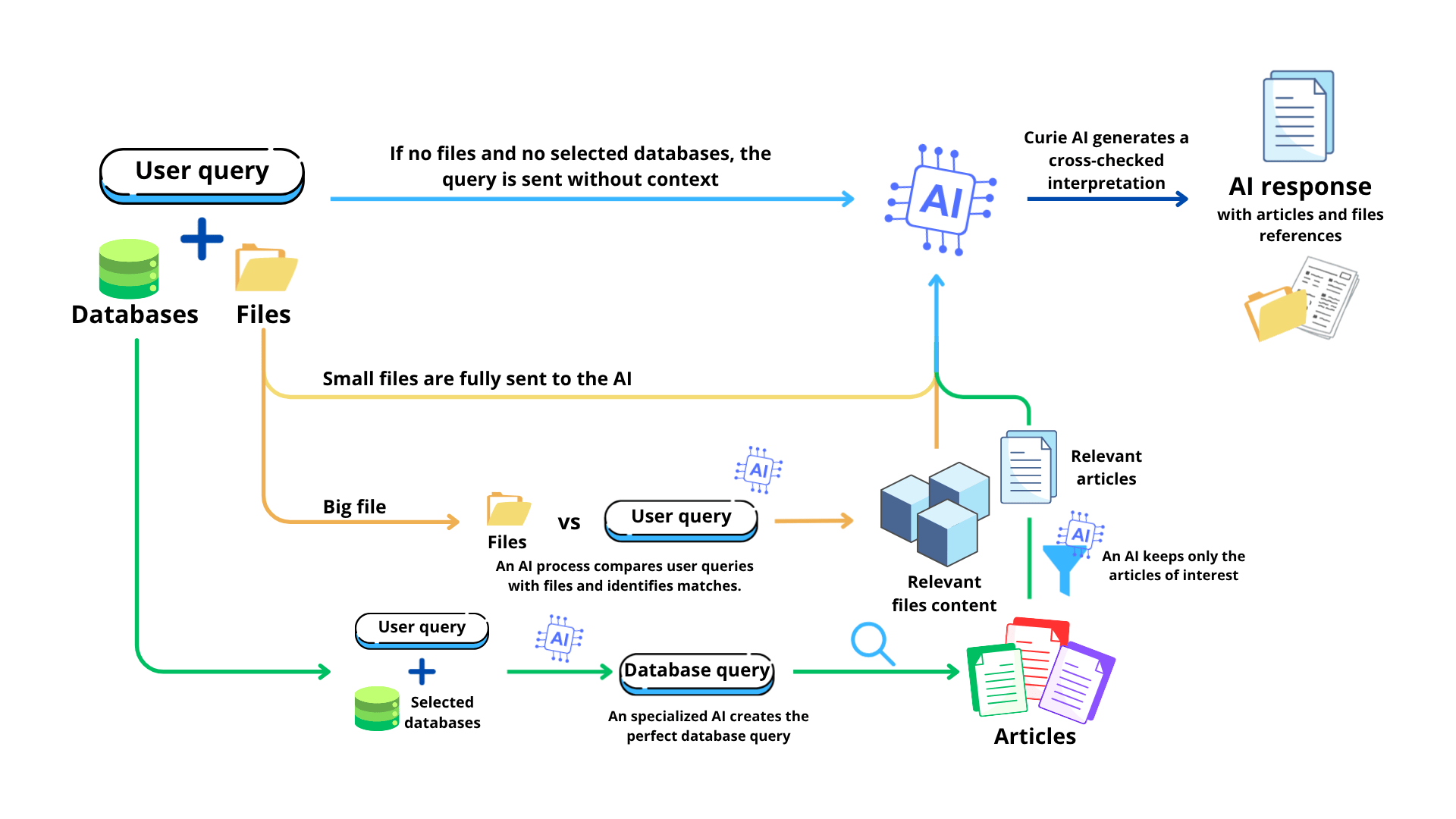
Processing & Analysis Flow
Deployment & Scalability
Features
Natural language
Most research tools force you to learn their logic. Curie works the other way around — you write exactly as you think, in plain language, and it understands what you're looking for. No special syntax, no structured queries, no learning curve.
Search databases
Instead of opening five tabs and manually cross-referencing results, Curie connects directly to PubMed, Semantic Scholar, arXiv, Web of Science, and Google Scholar. You ask once, and it searches across all of them at the same time, filtering down to what's actually relevant to your question.
Import files
Academic papers are long. Curie handles that — you can upload PDFs, DOCXs, TXTs, and MDs of up to 250 pages and it will process the entire document, not just skim the abstract. That means you can ask specific questions about methodology, results, or references buried deep in the file and actually get accurate answers.
Contextual answers
A single question rarely gets you where you need to go. With Curie, every follow-up message builds on everything said before — it remembers the full conversation, so you can refine your question, challenge an answer, or go deeper into a topic without having to repeat yourself or start over.
Code, schemas and more
When words aren't enough, Curie generates. Visual diagrams, data schemas, code snippets, formatted tables — anything you might need to take an idea further or present it clearly, ready to copy and use directly.
Media
Poster
Screenshots
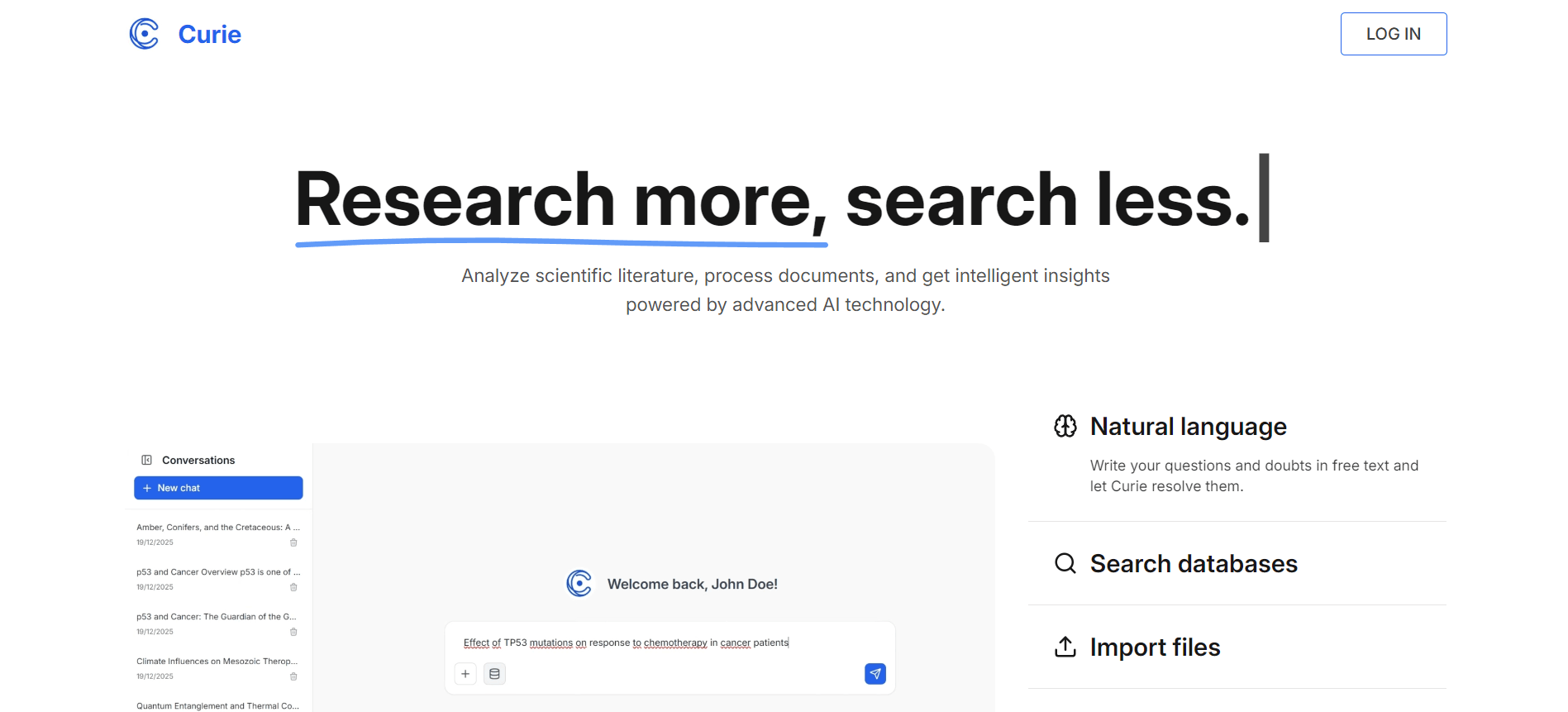
Homepage
AI-powered bioinformatics platform with real-time chat interface and PubMed integration.

Login
Secure authentication system for researchers.

Chat Interface
Real-time communication with AI models specializing in biomedicine.
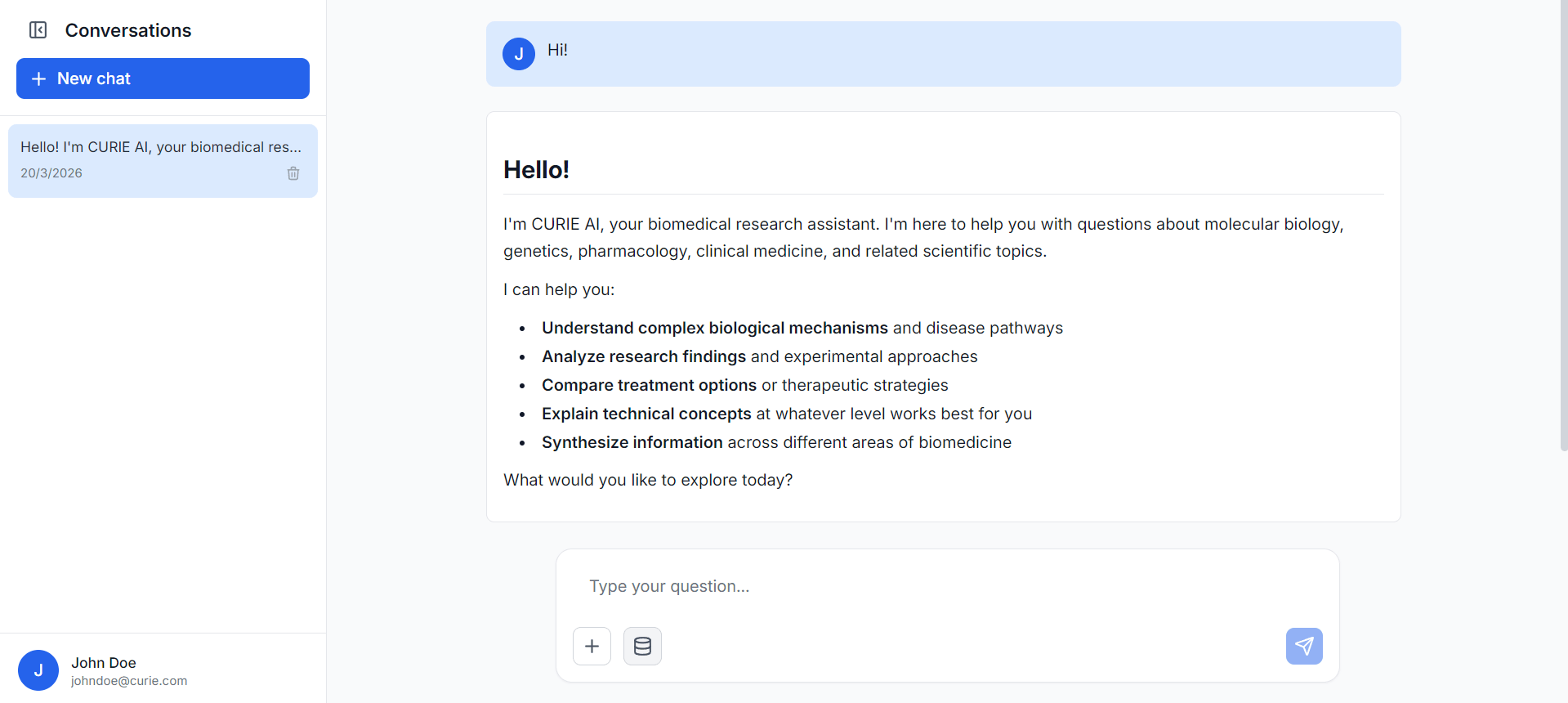
AI Response
Example of a message to the AI showing how the chat interface looks when it responds.